Editor’s Note: Originally published on Gandhi Jayanthi 2024, this article has been refreshed for the 157th birth anniversary in 2026, with updated facts, new data, and a fresh look at why non-violence still matters in India today. Last updated: 2 October 2026.
Gandhi Jayanti is celebrated every year on October 2nd. Importantly, it is also known as the International Day of Non-Violence. This year, in 2026, we honor the 157th birth anniversary of Mahatma Gandhi. His teachings on non-violence, truth, and social justice remain crucial today. Honestly, I sometimes wonder whether we celebrate the man or merely the holiday. Still, his lessons on truth, dignity, and social justice remain strikingly practical. Moreover, non-violence in India today feels less like nostalgia and more like survival. So, let us see how this old idea can solve very modern problems.
The Importance of Non-Violence in India Today
Non-violence is not weakness; it is disciplined, stubborn courage. Gandhi proved that peaceful resistance can shake even a mighty empire. He called non-violence the greatest force at the disposal of mankind. Still, any force needs regular practice to stay sharp. Therefore, the farmers’ protest of 2020–21 remains a useful reminder of peaceful persistence. However, we cannot keep living on yesterday’s victories alone. Instead, non-violence in India today must answer today’s questions.
Today, peaceful mobilisation looks quite different from those marches. Citizens file RTI applications, attend Gram Sabhas, and organise quiet candlelight vigils. Meanwhile, debates on gender equity, caste discrimination, and enforcement of laws like PCPNDT continue. Activists such as Medha Patkar and Aruna Roy still model patient, non-violent advocacy. Surveys in recent years also show strong Indian support for peaceful protest. Clearly, Gandhian values enjoy public backing, and leaders should honour that trust. After all, peace is cheaper than repair, as every municipal budget confirms.
Gandhian Values and Their 2026 Applications
| Gandhian Value | Classic Meaning | 2026 Application |
|---|---|---|
| Ahimsa | No harm in word or deed | Digital Ahimsa; verify before forwarding |
| Satya | Truth in public life | RTI, social audits, honest Gram Sabha debate |
| Sarvodaya | Welfare of all | People’s Plan Campaign 2026–27 |
| Swadeshi | Local self-reliance | Buy local, cut waste, support GOBARdhan |
Source: ExpressIndia.info analysis based on Gandhian principles and 2026 government initiatives.
Gandhi Jayanti and Sustainable Living: A Gandhian Approach
Gandhi believed in simple living and genuine self-reliance. He warned that the earth provides enough for everyone’s need, not everyone’s greed. India’s environmental pressures prove his point almost daily. Air pollution chokes our cities, and Delhi regularly tops global pollution lists. Water scarcity and climate stress add further weight to the burden. Consequently, sustainability becomes a moral choice, not merely a policy target. This Gandhi Jayanti, let us treat the planet as a fellow citizen.
Swadeshi, in this light, simply means buying local and wasting less. The Atma Nirbhar Bharat initiative encourages local production in that very spirit. India also targets net-zero emissions by 2070, which demands collective effort. Therefore, urban gardening, composting, and community clean-ups matter more than glossy slogans. I once watched a neighbour segregate waste for months, quietly shaming our entire lane. Soon, even the stubborn uncle downstairs bought two dustbins. That, my friends, is Ahimsa with a dustbin.
Swachh Bharat Mission 2026: Non-Violence in Action
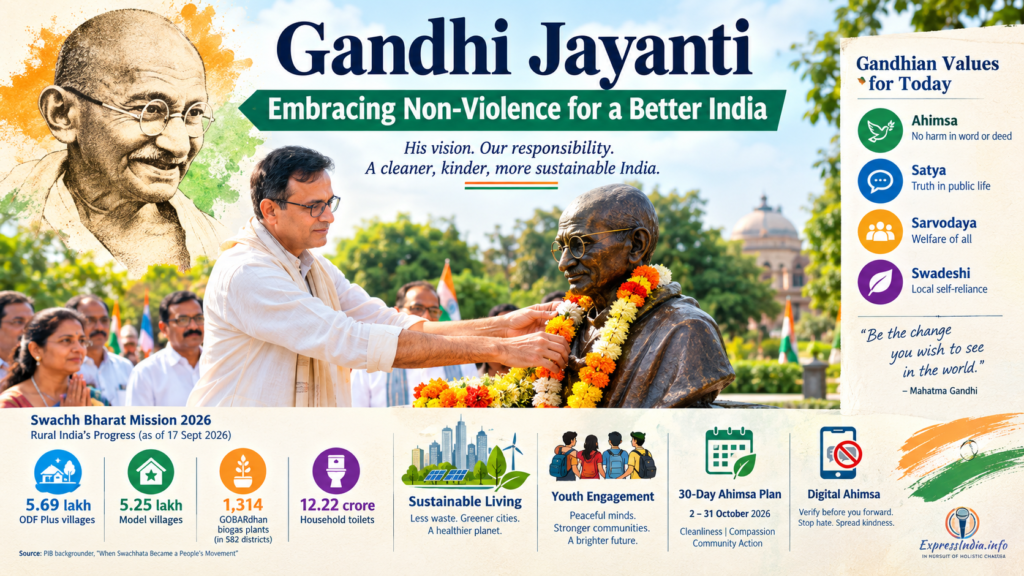
Gandhi treated cleanliness as a daily duty, not a chore for others. Swachh Bharat Mission 2026 shows this constructive programme working at national scale. As of 17th September 2026, India has 5.69 lakh ODF Plus villages. Of these, 5.25 lakh hold the higher Model status. Besides, 5.38 lakh villages manage solid waste, and 5.65 lakh handle liquid waste. In 2014, by contrast, rural sanitation coverage stood at just 39 per cent. Clearly, Swachh Bharat Mission 2026 is a story of habit, not just toilets.
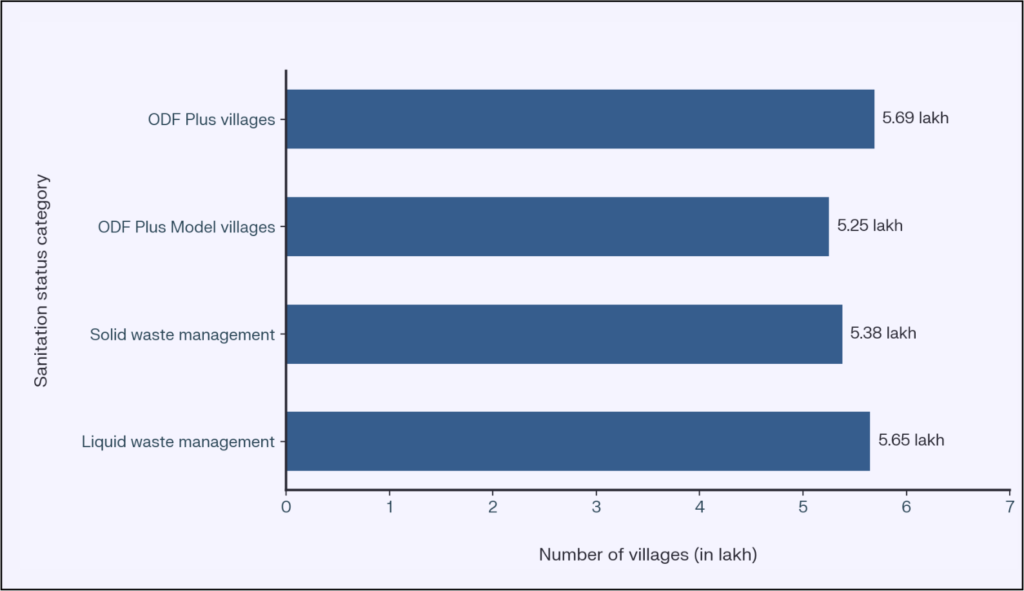
Source: PIB backgrounder, “When Swachhata Became a People’s Movement”
Further, 1,314 GOBARdhan biogas plants now operate across 582 districts. They convert cattle dung and farm residue into biogas and organic manure. Moreover, 12.22 crore household toilets protect health, dignity, and women’s safety. Open defecation is a quiet violence against children and the environment. Meanwhile, a 30-day national cleanliness campaign runs from 2 to 31 October. Join it, because Swachh Bharat Mission 2026 needs citizens more than cameras. After all, everyday Ahimsa starts right at your doorstep.
Youth Engagement: The Future of Non-Violence
India’s young people are its biggest asset. Schools and colleges mark the day with debates, skits, and cleanliness drives. However, one day of enthusiasm is never enough. A very large share of Indians is under 25, according to national youth policy data. Hence, their choices will decide how peaceful the country becomes. Initiatives like Gandhi Global Family and Youth for Peace channel that energy into dialogue. Besides, such platforms teach young people to disagree without hating.
Digital Ahimsa and Youth
The new battlefield, however, is the smartphone. Trolling, doxxing, and forwarded rumours wound people without a single punch. Digital Ahimsa means pausing before you press share. Verify first, forward later. Also, argue with ideas, never with abuse. Frankly, my family WhatsApp group could use a Gandhi-sized timeout. Therefore, make Gandhi Jayanti the day you mute one toxic thread.
Gandhi’s Influence on Global Movements
Gandhi’s philosophy travelled far beyond India’s borders. Martin Luther King Jr. and Nelson Mandela drew from his methods. Malala Yousafzai, too, has cited him as an influence in her fight for girls’ education. In 2007, the United Nations declared 2 October the International Day of Non-Violence. That recognition honours his global impact on peace movements. Yet honouring is easy, while practising is hard. Indeed, the International Day of Non-Violence matters most when headlines turn grim.
Conflicts in Ukraine and Gaza continue to test the world’s patience. Closer home, Manipur remains fragile and still needs dialogue and reconciliation. Dialogue, due process, and humane treatment must guide every such effort. Notably, the Global Peace Index 2026 ranks India 127th among 163 countries. In 2024, the same index placed India at 144th. Rankings move, but the lesson stays the same. Peace, like a garden, needs daily maintenance.
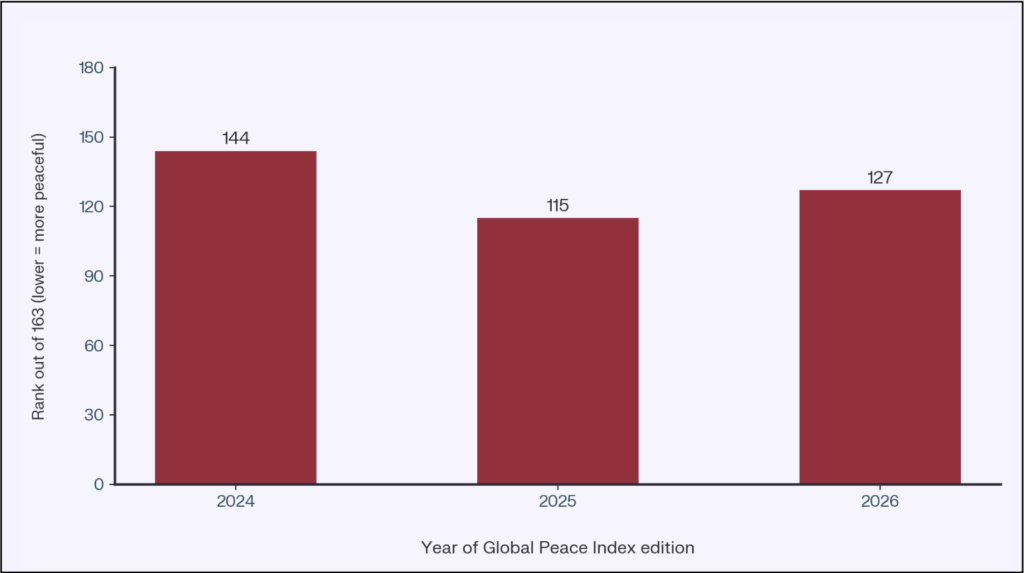
Source: Institute for Economics & Peace, Global Peace Index 2024 and 2026; 2025 rank from Drishti IAS. Lower rank means more peaceful.
The Role of Education in Promoting Gandhian Values
Education spreads values faster than any speech. Schools can weave Gandhian values into civics, stories, and class projects. Conflict-resolution programmes teach negotiation and empathy early. Research on such programmes links them with less bullying and fewer fights. Dr B.R. Ambedkar urged us to educate, agitate, and organise. Notice that education comes first, not last. Consequently, a classroom is the cheapest peace-building tool we own.
Therefore, schools should host workshops on Gandhian values and peer mediation. Teachers also need training to handle classroom conflict without shouting. Colleges can run Gram Sabha internships, linking campus life to local governance. Students learn truth, too, by auditing their school’s waste and water use. As a result, they become peace advocates in their neighbourhoods. Imagine a generation that argues brilliantly yet never humiliates anyone. Gandhian values, then, become habits rather than exam answers.
Gandhi Jayanti Pledge: A Holistic Approach for a Better India
Gandhi Jayanti 2026 is more than a ritual; it is a to-do list. Special Gram Sabhas begin today under the People’s Plan Campaign 2026–27, “Sabki Yojana, Sabka Vikas”. They let villagers shape their own Panchayat plans peacefully. That, in my view, is Satyagraha with a notebook. Meanwhile, sustainable habits, youth leadership, and values-based schooling complete the picture. Above all, no single scheme delivers peace alone. Hence, non-violence in India today needs every one of us.
Gandhi said the future depends on what we do in the present. So, pick one action this month and keep it. Join a cleanliness drive, attend your Gram Sabha, and practise digital Ahimsa. Then tell me how you practise non-violence daily. Share your story in the comments, and tag a friend. Gandhi Jayanti ends tonight, but Ahimsa should not.
ExpressIndia.info stands firmly for truth, dialogue, and a non-violent, accountable India.
Your 30-Day Ahimsa Plan (2–31 October 2026)
| Week | Action | Gandhian Value |
|---|---|---|
| 1 | Join a local cleanliness drive | Ahimsa towards the environment |
| 2 | Attend your Gram Sabha or ward meeting | Sarvodaya |
| 3 | Mute one toxic online thread | Digital Ahimsa |
| 4 | Teach a student about peaceful conflict resolution | Satya |
Source: ExpressIndia.info, based on the Gandhi Jayanti 2026 national cleanliness campaign and Gram Sabha schedule.
#GandhiJayanti #NonViolence #SwachhBharat #Ahimsa #ExpressIndia
https://www.youtube.com/watch?v=ApF3O7hUNQw
https://www.youtube.com/watch?v=TkHTbkPoEQ8
Good job
Thank you, George!
Hi Ranjan! Thanks for this timely write up! Looking forward to many more from you!
Chitra
Thank you, Chitra for your support! Sure, there are lots more in the pipeline.