World Health Day 2026 and you
Delving into World Health Day 2026
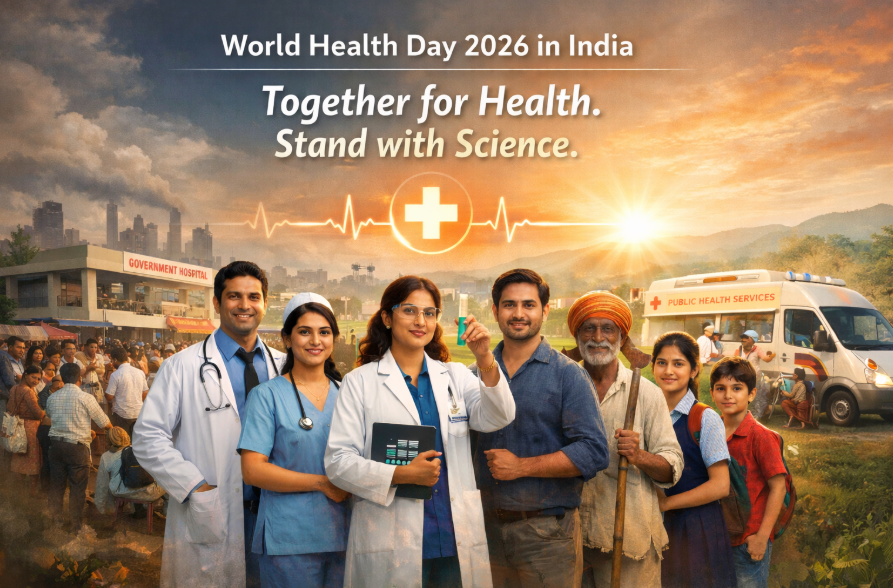
World Health Day is commemorated on 7th April, and I genuinely see World Health Day 2026 as India’s loudest health wake‑up call in years. Under the theme “Together for health. Stand with science”, the World Health Organization is asking every country to turn solid evidence into everyday action, not just run symbolic events. In India, this theme collides with hard realities, from rising non‑communicable diseases (NCDs) to toxic air and mental stress, and therefore it feels deeply personal. As I look around, I notice that almost every family carries a story of diabetes, heart disease, anxiety, or pollution‑linked breathing troubles. So, as you read this, I invite you to ask yourself a simple, slightly uncomfortable question. If World Health Day 2026 is a wake‑up call, then what exactly do we, as Indians, need to wake up to today?
Traversing the journey through India’s health challenges
In this blog, I will keep circling back to World Health Day 2026 as we explore India’s health challenges from multiple angles, including frontline workers, AI‑driven healthcare, women’s invisible care work, and the future of our ageing parents. Along the way, we will talk about universal health coverage in India through Ayushman Bharat, air pollution’s assault on our lungs and brains, and the neglected mental health tsunami. You will also see how One Health and climate stress now sit at the heart of any honest health conversation. I will weave in three voices that matter deeply in Indian health debates: Narendra Modi, Dr Devi Shetty, and Dr Soumya Swaminathan. And yes, I will keep asking you questions, because this story is really about your body, your family, your city, and your choices.
World Health Day 2026 theme: “Together for health. Stand with science.”
Unpacking the theme in India’s messy, beautiful reality
Officially, the World Health Organization (WHO) describes the World Health Day 2026 theme “Together for health. Stand with science” as a call for governments, professionals, communities and individuals to defend evidence‑based health decisions in an era of misinformation and polarisation. In India, that message lands in a deeply unequal system where cutting‑edge AI tools and world‑class hospitals coexist with overcrowded primary centres and WhatsApp forwards selling miracle cures. When WHO urges us to “stand with science”, it is not only talking to researchers; it is speaking to families deciding whether to vaccinate, to farmers choosing between clean fuel and cheaper options, and to citizens deciding whether to wear masks on high‑pollution days. Incidentally, I find this especially relevant when even well‑educated friends casually dismiss air‑quality data or mental‑health evidence as “overblown” until crisis hits their own homes. So, the theme, for India, is really a mirror: do we prefer comfortable myths, or do we have the courage to live with uncomfortable truths?
From slogan to script: what “together” really demands from India
The first word in the theme, “Together”, might be the hardest for us because it demands that politicians, bureaucrats, doctors, civil society and citizens behave like a team, not like rival tribes. Prime Minister, Narendra Modi frequently frames India’s health vision as preventive and holistic, emphasising the need for yoga, fitness and early diagnosis alongside modern infrastructure and technology. Dr Devi Shetty, from his vantage point in high‑volume cardiac care, bluntly reminds us that universal healthcare in India is possible within a few years “with a few financial innovations” and ruthless efficiency. Besides, Dr Soumya Swaminathan warns that our biggest health threats are what we eat and the air we breathe, not just rare pathogens and exotic viruses. When I listen to these voices together, I hear a clear script: science must guide policy, budgets, urban design and even our dinner plates. The unsettling question, again, is whether we are willing to play our part in that script or just clap from the audience.
World Health Day 2026 and India’s health challenges
India’s shifting disease map, viewed through World Health Day 2026
When we talk about India’s health challenges today, we cannot escape the quiet dominance of non‑communicable diseases. NCDs like heart disease, diabetes, cancers and chronic respiratory illnesses now cause roughly 63–65% of all deaths in India, up from about 38% in 1990. That means most Indians are no longer dying mainly from infections but from slow, lifestyle‑linked, and environment‑driven conditions in their most productive years. The government’s own data shows that a quarter of NCD deaths hit adults between 30 and 70, stealing decades of work, caregiving and creativity. Hence, when World Health Day 2026 urges us to “stand with science”, it really nudges India to invest in prevention, screening and early care rather than chasing late‑stage emergencies.
Why India’s health challenges demand science plus courage
Public health experts have called India a hub of non‑communicable diseases, warning that without decisive action this spiral will only accelerate. I often think about how normalised it feels when colleagues casually joke about “borderline sugar” “moderate drinking” or “slight blood pressure” while skipping check‑ups. Yet, the science is brutally clear that small lifestyle changes and early detection could prevent thousands of strokes, heart attacks and amputations. The bigger question, though, is whether we are ready to treat India’s health challenges as a shared societal responsibility rather than a private family tragedy. World Health Day 2026 becomes powerful only when it pushes us from awareness posts to uncomfortable policy choices, like heavily taxing junk food, cigarettes, carbonated, aerated and alcoholic drinks or redesigning our cities for seamless walking. Are we prepared to accept those trade‑offs, or will we keep pretending that individual willpower alone can fix a systemic storm?
India’s health challenges in one snapshot
| Indicator | Latest estimate (India) | Source |
|---|---|---|
| Share of deaths from NCDs | About 63–65% of all deaths | Drishtiias |
| Rise in NCD death share (1990–2023) | From 37.9% to over 63% | Drishtiias |
| Air‑pollution deaths (2023) | Around 2 million deaths | Downtoearth |
| Share of air‑pollution deaths from NCDs | About 86–89% linked to NCDs | Downtoearth |
| Adults with mental disorders | About 10.6% of adults; 15% need intervention | Mohfw |
| People affected by mental disorders | Around 197 million Indians in 2017 | pmc.ncbi.nlm.nih |
| People covered by Ayushman Bharat | Roughly 50 crore targeted; over 42 crore Ayushman cards made | Vaishali |
Air, climate and World Health Day 2026
Air pollution turning India’s health challenges into a silent emergency
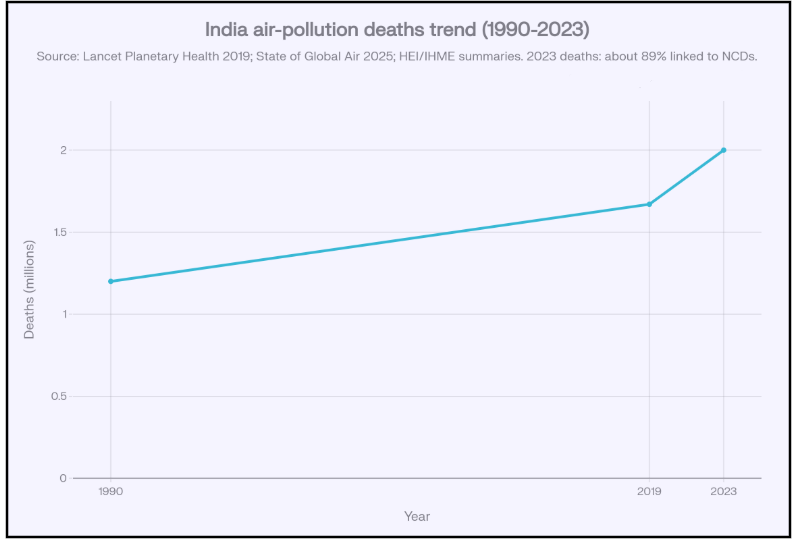
The State of Global Air 2025 report delivered a stark warning for India. In 2023, around two million deaths in the country were linked to air pollution, up from 1.4 million in 2000, a surge of roughly 43%. Nearly nine out of ten of these deaths were tied to NCDs such as heart disease, lung cancer, COPD, diabetes and even dementia. Scientists now show how fine particulate matter damages brain tissue, contributing to more than 54,000 dementia deaths in India in 2023 alone. So, when you step out during a hazy Delhi winter or a smoky festival night, you are not just inhaling inconvenience; you are inhaling a long‑term cognitive and cardiovascular risk.
Linking World Health Day 2026 with One Health and justice
World Health Day 2026 explicitly pushes a One Health lens, reminding us that human health is inseparable from the health of animals, plants and our wider environment. In India, it means that we cannot discuss health without talking about crop stubble burning, urban planning, industrial emissions and climate‑driven heatwaves in the same breath. It also means recognising that the poorest communities often live closest to pollution and have the least access to clean fuel or green spaces. As Dr Soumya Swaminathan recently warned, India’s biggest health threats are not exotic pandemics but “what people eat and the air they breathe”. I find that line uncomfortably honest, because it places responsibility simultaneously on policy makers, corporations and each of us. Will World Health Day 2026 finally push us to treat clean air as a non‑negotiable health right, rather than a seasonal headline?
trend
India’s Air pollution deaths trend (1990-2023)
Mind, stress and World Health Day 2026
Mental health as the hidden core of India’s health challenges
Behind the visible statistics of diabetes and heart disease sits an equally serious mental health burden. National surveys suggest that about 10.6% of Indian adults live with mental disorders, while roughly 15% need some form of mental health intervention. One major study estimated that 197 million Indians were affected by mental disorders in 2017, with suicide rates of around 12.4 per 100,000 people by 2022. Urban areas show higher prevalence than rural, yet rural areas often have weaker services and deeper stigma, creating a cruel double bind. I often meet people who call their anxiety “just tension” or their depression “a phase” because seeking help still feels shameful to many.
Why World Health Day 2026 must normalise mental healthcare
Government documents now openly acknowledge that poor mental health disrupts productivity, relationships and economic growth, yet mental health spending remains a tiny fraction of India’s health budget. World Health Day 2026 gives us a moment to argue that science‑based counselling, community outreach and tele‑mental health must come within the purview of primary care, not outside it. For young Indians under relentless exam stress, work overload, unstable jobs and digital deluge, this shift may literally be life‑saving. Every time we casually advise someone to “man up” instead of suggesting professional help, we stand against science, not with it. Are we ready, as families and workplaces, to treat therapy as normal and necessary, just like a blood test or an eye check‑up?
Women’s unpaid care and India‘s gendered health challenges
Women carrying India’s health system on unpaid shoulders
Inside most Indian homes, it is women who wake up at odd hours, track medicine schedules, escort relatives to clinics and stand in endless queues. Yet, their own health checks are usually postponed, dismissed as indulgent or simply unaffordable, especially in low‑income families. When NCDs expand, this invisible load grows heavier, because every chronic illness needs continuous attention, not one‑off heroics. India’s health challenges therefore land differently on women, combining physical exhaustion, emotional burnout and financial dependence. I often hear mothers joke, “Doctor ke paas toh bas sasurji jaate hain,” and that dark humour says everything.
World Health Day 2026 through a feminist public health lens
If World Health Day 2026 in India is serious about “Together for health”, then it must include time‑use data, gender‑disaggregated health statistics and social protection for caregivers. Schemes like Ayushman Bharat reduce catastrophic hospital bills, but they do not automatically compensate for lost wages or long‑term care responsibilities that often fall on women. Policy discussions about universal health coverage in India need to explicitly ask: who is doing the daily labour that keeps patients alive between hospital visits? Bringing caregivers into health policy is not a soft add‑on; it is a hard economic necessity. Otherwise, we risk solving one layer of India’s health challenges while quietly deepening another.
Ayushman Bharat, seniors and universal health coverage in India
How Ayushman Bharat is reshaping universal health coverage in India
Ayushman Bharat’s Pradhan Mantri Jan Arogya Yojana promises up to ₹5 lakh per family each year for hospitalisations, targeting about 10.74 crore vulnerable families, nearly 50 crore people. By late 2025, more than 42 crore Ayushman cards had been issued and over 33,000 hospitals empanelled, blending public and private capacity. In 2024, the scheme expanded further to offer free treatment benefits to nearly six crore senior citizens aged 70 and above, regardless of their economic status. On paper, these moves push India closer to universal health coverage in India, especially for catastrophic hospital expenses.
Where World Health Day 2026 nudges Ayushman Bharat next
The real test, however, lies in whether an elderly villager or an urban informal worker can easily use the card without confusion, denial or humiliation. As Dr Devi Shetty bluntly notes, “India needs healthcare reforms urgently if it wants the poor to get better access to it… universal healthcare can be achieved in just five years with a few financial innovations.” His focus on radical efficiency, better throughput and smart insurance models echoes the World Health Day 2026 call to stand with science and systems, not just sentiment. For families juggling ageing parents, multiple prescriptions and limited savings, universal health coverage in India is not an abstract goal; it is the difference between dignity and debt. The question is whether we will keep pressure on governments and hospitals to deliver cashless, respectful, transparent care consistently.
Digital health, AI and World Health Day 2026
AI, digital records and the new face of India’s health challenges
By 2025, India had created tens of crores of digital health IDs under the Ayushman Bharat Digital Mission, aiming to streamline records and improve continuity of care. At the same time, national strategies for AI in healthcare are emerging, focusing on diagnostics, triage and workflow automation to ease pressures on overstretched doctors. Prime Minister Narendra Modi recently highlighted that India is “working on a grand vision for preventive and holistic health”, with hundreds of new medical colleges and wellness centres. In another address he explained that India’s health strategy now rests on five pillars, starting with “preventive healthcare, meaning protection before the disease occurs”, followed by timely diagnosis, affordable treatment, quality care even in smaller towns, and expanded use of technology. I find it striking that his first pillar is preventive health, because that places World Health Day 2026 right at the centre of policy thinking.
Will digital health deepen or reduce India health challenges?
AI‑driven tools can flag early warning signs in ECGs, X‑rays or lab trends, which could be transformative for universal health coverage India if deployed in primary care. However, they can also widen gaps if people without smartphones, digital literacy or reliable connectivity are left behind. Dr Soumya Swaminathan has repeatedly stressed that disruptive technologies matter only when backed by strong primary healthcare, robust data systems and a trained public health workforce. That perspective fits perfectly with World Health Day 2026, which celebrates science but insists on equity and trust. As a citizen, I feel excited by AI’s promise, yet I remain wary: will it serve the slum dweller and the small farmer, or only the insured urban professional?
Youth, lifestyle and India’s health challenges
Young India, fast food and slow harm
India’s nutrition story now has a double face: continued undernutrition alongside rising obesity and lifestyle disease, especially among urban youth. Studies show that many Indian diets remain heavy on refined carbohydrates while staying low on protein, fuelling both diabetes and “hidden hunger”. Dr Soumya Swaminathan warns that poor diet and polluted air together threaten the very strength of India’s future workforce. For young professionals jumping between screens, deliveries and deadlines, those warnings may sound abstract until a friend gets a sudden cardiac scare. I often wonder: if we plotted a personal dashboard of sleep, steps, stress and snacks, would we dare to look at it honestly?
Using World Health Day 2026 to reset youth choices
World Health Day 2026 gives schools, colleges and startups a perfect hook to run science‑backed campaigns on movement, nutrition and digital hygiene. Imagine college fests where step‑counts and air‑quality monitors become cooler than late‑night junk food selfies. City planners can join this conversation by designing safer pavements, cycling lanes and green pockets, turning universal health coverage India into a lived urban experience, not just a policy phrase. If you are a young reader, here is a blunt question. When your future self looks back from 2047, will they thank you for today’s habits or quietly curse them?
Communities, civil society and standing with science
How communities translate World Health Day 2026 into daily practice
Across India, NGOs, RWAs and grassroots groups already run health camps, mobile clinics and awareness drives that quietly uphold the spirit of World Health Day 2026. Some partner with government facilities to conduct NCD screenings, TB detection and mental health counselling in underserved neighbourhoods. Others focus on environmental justice, tracking local air‑quality data or pushing municipalities on waste management and traffic design. I have seen how a well‑designed community WhatsApp group sharing verified health information can sometimes do more than a sterile government poster campaign. Trusted, local, conversational content matters enormously when fighting misinformation.
From health camps to health rights
At the same time, civil society groups increasingly frame health not as charity but as a rights‑based demand for decent services, clean environments and fair budgets. Dr Soumya Swaminathan has argued that pandemics and climate shocks should be used as opportunities to strengthen public health laws, surveillance and prevention‑focused cadres. That thinking lines up with the UN’s new global declaration on NCDs and India’s own commitments to universal health coverage in India in multilateral forums. As citizens, we can either treat World Health Day 2026 as yet another hashtag, or we can use it as an annual reminder to ask hard questions at ward meetings, gram sabhas and budget discussions. Which option sounds more respectful to the families already paying the price of system failures?
Money, policy and India’s health challenges
Spending more, and smarter, on health
Although public health spending in India has risen in recent years, it still hovers near 2% of GDP and less than 2% of the overall government budget, lower than several other BRICS countries. Dr Soumya Swaminathan has called for significantly higher health investments, emphasising that disruptive technologies deliver real value only when anchored in strong primary care and ethical, evidence‑based systems. Meanwhile, the Ayushman Bharat programme has expanded both financial protection and digital health infrastructure, even as out‑of‑pocket expenses remain a heavy burden for many households. Dr Devi Shetty reminds us that “universal health insurance in India is not a matter of ‘if’ but ‘when’”, and that true affordability will come from radical efficiency rather than simply working harder.
Aligning World Health Day 2026 with long‑term reforms
For policy makers, World Health Day 2026 can serve as an annual checkpoint: Are we genuinely shifting from hospital‑centric spending to prevention, primary care and mental health support? Are we integrating environmental regulation, urban planning, food systems and education policy into our health strategy, as One Health principles demand? For citizens, the question is simpler yet sharper. Do we vote, campaign and volunteer as if health were central to India’s development story, or do we treat it as a personal issue until crisis hits our own home?
India’s Health spending trend
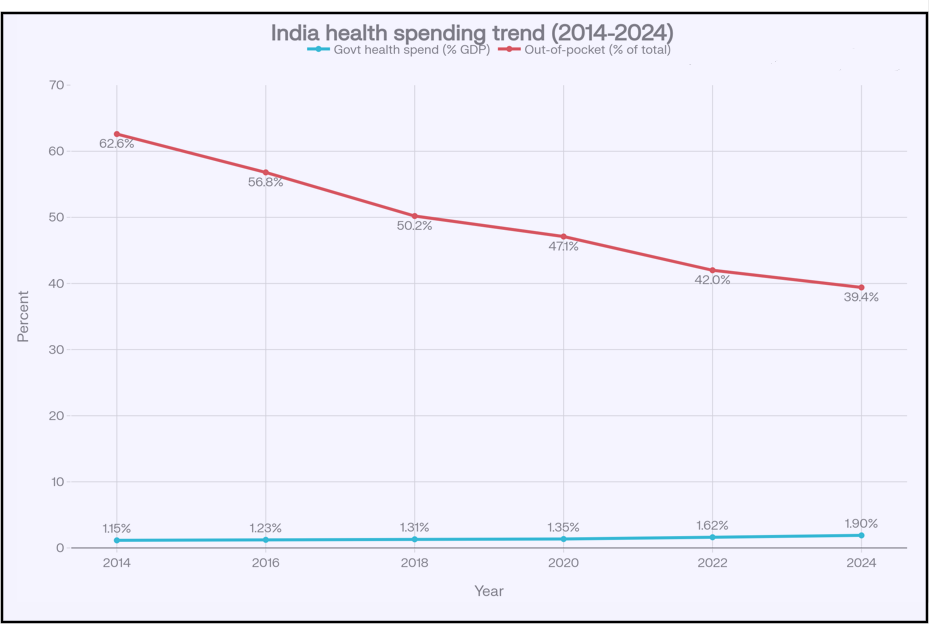
Source: National Health Accounts Estimates for India 2019–20, PIB’s FY24 health expenditure note, and official statements on declining out-of-pocket expenditure
Turning World Health Day 2026 into a daily habit
From awareness day to lifelong practice
As we step into World Health Day 2026, India’s health challenges look daunting but not hopeless. Science already tells us what works: prevention over care, cleaner air, better nutrition, active lifestyles, stronger primary care, deeper mental health support and financial protection for the poorest. “India is today working on a grand vision for preventive and holistic health,” as Prime Minister Narendra Modi puts it. However, the success of that vision depends on whether each of us treats prevention as a daily discipline rather than a yearly slogan. World Health Day 2026 is therefore not just a calendar event; it is an invitation to redesign how we eat, move, breathe, work, vote and care.
Personal growth, social contribution and your next step
At a personal level, holistic change could mean scheduling that long‑pending check‑up, walking more, cutting down ultra‑processed foods, protecting your sleep and finally taking your mental health seriously. Socially, it might mean supporting an NGO, joining an air‑quality campaign, helping elders navigate Ayushman Bharat, or simply refusing to forward unverified health messages. I would urge you to treat universal health coverage in India and World Health Day 2026 as part of your identity, not just policy slogans. So, here is the final question I leave you with today. When the next World Health Day arrives, will you be able to say, with a straight face, that you genuinely stood with science – for your body, your family and your country?
While World Health Day 2026 urges fresh action, it also invites us to reminisce about World Health Day 2025 and the conversations it sparked.
#WorldHealthDay2026 #HealthWakeUpCall #IndiaHealthChallenges #UniversalHealthCoverage #StandWithScience