
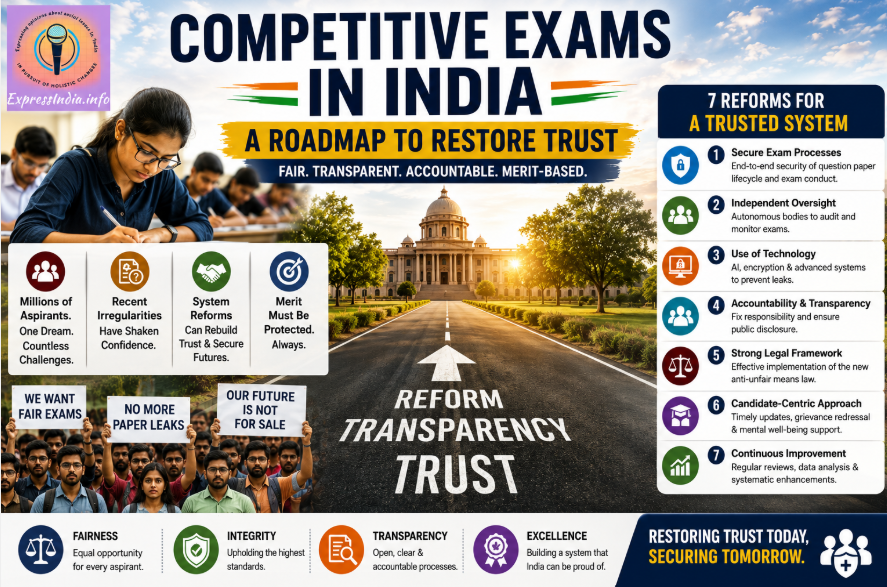
Competitive exams in India decide far more than a single test score. They decide who gets a government job and who repays years of family debt. Besides, they decide who finally sleeps well after months of anxiety. So, when Parliament passed the Public Examinations (Prevention of Unfair Means) Amendment Bill, and the amended law came into force on August 1st, 2026, many aspirants felt hopeful. Yet, just weeks later, Jharkhand cancelled an exam tracing back to 2014. In the meantime, Keralam PSC was busy defending its own evaluation system.
Consider Meera, a composite portrait drawn from countless aspirants rather than one individual. She has spent four years and nearly two lakh rupees preparing for a state exam. She has forfeited two marriage proposals, citing “career priorities” to her bewildered family. Her father’s patience, once boundless, has grown visibly threadbare with each passing attempt. When her exam was abruptly annulled amid malpractice allegations, nobody asked how she felt. This is the emotional infrastructure beneath every headline about competitive exams in India. It is precisely the infrastructure that policy debates tend to overlook entirely.
In this context, here is the tough question this blog will chase down sincerely. India has toughened its exam laws a lot lately. But has it made the exam system itself trustworthy? We think that question deserves real digging, not quick assumptions. To start, we will walk through Jharkhand’s protest and Keralam’s evaluation mess. Then we will study a quieter overhaul inside India’s National Testing Agency. Together, these three threads will show why competitive exams in India need much more than just punishment.
Competitive Exams in India: What the New Law Changes for Aspirants
Let us start with the law, since context matters before being judgmental. The Lok Sabha passed the Amendment Bill on July 29th, 2026, with unusual urgency. The Rajya Sabha followed suit soon after that vote. The President then gave assent on July 31st, and the law took effect from August 1st across the country. That is a fast legislative sprint for such an old problem. Parliament deserves credit for moving quickly once pressure peaked publicly.
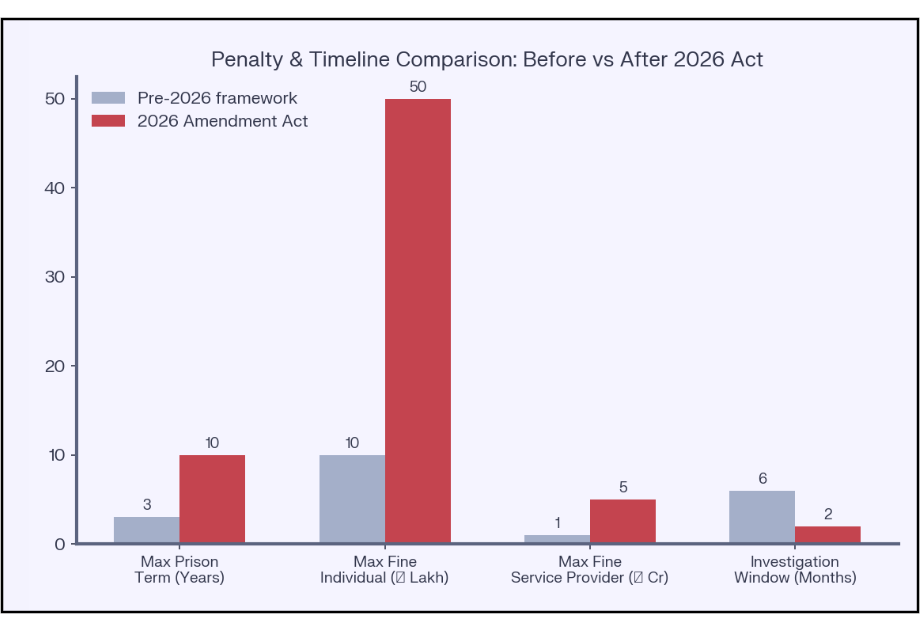
In retrospect, what does this new law actually change for aspirants? First, it sharply raises punishment for leaking papers or cheating. Individuals and hired vendors now face longer jail terms. They also face much steeper fines than before. Moreover, it creates Special Fast Track Courts for exam-related offences only. In addition, Special Public Prosecutors will argue these cases with sharp focus and investigations must close within roughly two months. Trials, similarly, must wrap up within about three months in total. Consequently, that should end the years-long limbo that many old cases vanished into.
But here is where the plot thickens for curious readers. This Amendment Act is, at heart, a punishment tool primarily. It punishes people only after something has already gone wrong. However, it says very little about stopping that breakdown early. Also, it does not force vendor background checks for outsourced exam agencies, nor does it demand independent audits of evaluation software used. Thereby, the law solves “what happens after a scandal breaks.” However, it barely touches “how do we stop the scandal early.” That gap is exactly where Jharkhand’s and Keralam’s stories begin.
The Anatomy of the Crisis: Setting the Scene
There is a particular silence that descends over an examination hall. It falls just before the invigilator says “you may begin.” This is the silence of a nation holding its breath. For millions of young Indians, that silence means something consequential. It has become a referendum on whether merit still matters. Merit, that most sacred and most abused of Indian words, is on trial. This piece sits inside that silence and asks an uncomfortable question. Can a system this frequently betrayed still command genuine trust?
The new law promises harsher punishments, fast-track courts, and time-bound investigations. However, almost simultaneously, as if scripted by some perverse dramatist, fresh scandals erupted elsewhere. Jharkhand’s government was forced to annul an entire decade of recruitment exams. Keralam’s Public Service Commission, meanwhile, faced allegations of evaluation manipulation. The irony writes itself: India strengthened its legal armour precisely as fresh cracks appeared.
This juxtaposition deserves scrutiny rather than mere lament or easy despair. Competitive exams in India function as a kind of civic ritual, a rite of passage. Through this ritual, economic mobility is supposedly distributed on merit alone. When that ritual is corrupted, the damage extends beyond individual disappointment. It corrodes the implicit social contract binding citizen to state. Is a stronger punitive law sufficient to repair such corrosion? Or does it merely treat the symptom while deeper pathology festers unchecked? That is the central puzzle this investigation seeks to unravel.
Jharkhand’s Reckoning: When Cancellation Becomes Its Own Injustice
The protest that unfolded in Ranchi lasted twenty-four days. It was less a spontaneous eruption than a slow-burning accumulation of grievance. It drew parallels with CJP’s protest at Jantar Mantar in July, 2026. Aspirants alleging irregularities in JSSC-CGL staged hunger strikes with near-monastic discipline. Their demand was neither exotic nor unreasonable in any real sense. They wanted a thorough, centrally conducted investigation into a system they no longer trusted. On August 17th, following an emergency midnight cabinet meeting, Chief Minister Hemant Soren capitulated. He conceded a significant portion of the protesters’ demand, though not all of it.
The government voided every examination conducted by vendor TDPL since 2014. This was, by any measure, an extraordinary admission of institutional failure. One does not annul a decade’s recruitment processes lightly or casually. Doing so amounts to confessing that something rotted at the foundation for years. Still, here lies the first paradox this crisis illuminates uncomfortably. The remedy for one wound has opened another, an arguably deeper one. Candidates who had already secured employment now face suspended, uncertain livelihoods.
Herein resides what might be called the tragedy of retroactive justice. To cancel a tainted exam punishes both the guilty and the innocent alike. Fraud rarely announces itself with a helpful asterisk beside the names it touches. Should an honest appointee bear the cost of another candidate’s corruption? Merely because both sat the same flawed, compromised paper? This is not rhetorical flourish; it is a genuine, unresolved dilemma. Indian administrative law has yet to answer it with real sophistication.
Devendra Mahto, the student leader whose hunger strike became emblematic, ended his fast after the government’s decision. Yet, he pointedly refused to declare victory, insisting that the fight continues. His demand for a CBI probe suggests something perennially important about trust today. Aspirants no longer trust internal inquiries conducted by implicated institutions themselves. This scepticism, earned through repeated disappointment, cannot be legislated away easily. Not even the most muscular amendment act can manufacture trust by decree.
Keralam’s Quiet Unravelling: Evaluation, Evasion, and the Denial Optics
If Jharkhand represents the drama of mass protest, Keralam unfolds more quietly. Its crisis reads like an understated bureaucratic thriller, full of small procedural menace. Incidentally, ten descriptive questions in a Planning Board exam went entirely unevaluated. The lapse was traced to malfunctioning On-Screen Marking software used during evaluation. Roughly 228 candidates found their fates decided by incomplete answers. Most reasonable observers would call this procedurally indefensible on its face. However, PSC’s initial response, an internal vigilance inquiry, offered accountability’s appearance without necessarily its substance.
Matters escalated when Kerala’s Crime Branch, and later an SIT, reported troubling evidence. Investigators suspected evaluation errors were not accidental at all. Rather, they may have been engineered to favour one candidate’s ranking. One must exercise caution here, since these remain unproven allegations under investigation. Nevertheless, the plausibility of such orchestration is itself a damning commentary. It speaks volumes about institutional vulnerability, corroborated by an SIT suspecting broader conspiracy.
What makes Keralam’s case genuinely fascinating, in an almost Kafkaesque sense, is contradiction. PSC acknowledged the evaluation lapse and cancelled certain rank lists promptly. This looked, on its surface, like an act of institutional humility. Yet, in the same breath, it denied irregularities across fifteen separate exams entirely. It rejected allegations about interview marks with something approaching genuine indignation. Both postures, curiously, coexist without much logical contradiction whatsoever. Institutional self-preservation rarely follows the tidy rules of formal logic.
The transparency dimension supplies perhaps the most damning detail overall. Keralam’s State Information Commission ordered PSC to release disputed recruitment records fully. It called the earlier refusal unjustified, a rare rebuke from a neutral body. PSC nevertheless prepared to challenge this order in court immediately. Yet, it had already surrendered identical documents to Crime Branch investigators willingly. This is not mere bureaucratic inconsistency; it reveals something deeper and troubling. It exposes an asymmetry between what institutions show investigators and what they show citizens. As A.P.J. Abdul Kalam once observed, “a nation becomes corruption-free only when its own institutions submit to scrutiny”.
The Alappuzha Interlude: A Parable of Mundane Failure
Amid these sprawling narratives of alleged conspiracy, Alappuzha offers a sobering corrective. On July 18th, 2026, officials there distributed the wrong exam paper entirely. Candidates for the morning session received the afternoon session’s questions by simple mistake. This error was so elementary that it borders on the farcical and absurd. It forced the statewide cancellation of an entire afternoon session, embarrassingly. There was no syndicate here, no shadowy vendor, no digital malfunction. There was merely an invigilator reaching, with catastrophic carelessness, for the wrong envelope.
This incident functions almost as a parable about institutional fragility overall. Integrity is not solely imperilled by sophisticated villainy or grand conspiracy. It is equally threatened by the quiet erosion of basic procedural discipline. One might wryly observe that India’s exam system fails with impressive versatility. It breaks down equally at the hands of master criminals and careless clerks. The lesson, stripped of its dark comedy, remains genuinely sobering nonetheless. Security architecture alone cannot compensate for carelessness at the ground level.
Learning From Elsewhere: The Gaokao’s Uncomfortable Lesson
It would be dishonest to examine India’s predicament without glancing briefly abroad. By doing so, it helps interrogate our own assumptions about what rigour truly requires. China’s Gaokao, its notoriously unforgiving university entrance exam, employs extraordinary security measures. Facial recognition, radio-signal jammers, drones, and armed escorts guard question papers routinely. Papers are often transported to secure, sometimes prison-adjacent, printing facilities under guard. Some provinces even deploy artificial intelligence to flag “excessive glances” between distant candidates.
I’m not implying that we need to endorse this near-panoptic apparatus, which raises its own privacy concerns. China’s system treats examination security as an engineering problem demanding continuous investment. It requires unglamorous spending on logistics, custody, and round-the-clock surveillance infrastructure. India’s 2026 Amendment Act, by comparison, treats integrity mainly as a legal problem.
The NEET-UG paper leak controversy, which we dissected in detail earlier this year, remains the starkest reminder of how quickly institutional trust can evaporate when process fails. It demands harsher punishment strictly after the malpractice has occurred, rather than genuine prevention. Neither approach is obviously superior in its entirety or execution. Nevertheless, the comparison exposes a myth worth dismantling immediately and firmly. Tougher laws alone cannot substitute for tougher, more disciplined processes.
Mapping the Exam Lifecycle: Where the Chain Actually Snaps
Envision the examination process as a long, unglamorous supply chain for a moment. It resembles the chain that delivers medicine to a rural clinic. Every supply chain is only as trustworthy as its weakest link. India’s examination chain contains rather more weak links than citizens realise. It begins with question-paper creation, vulnerable to compromised setters and recycled patterns. It proceeds through printing, transport, storage, and distribution, each stage genuinely fragile.
Centre management and invigilation, as Alappuzha demonstrated with almost comic clarity, remain vulnerable too. They falter through simple human errors alongside occasional deliberate malfeasance. Digital evaluation, Kerala’s most instructive lesson, misfires when software audits become afterthoughts. Result processing risks opacity whenever rank-list criteria stay unpublished or inconsistently applied. Grievance redressal, finally, stalls indefinitely when transparency is treated as optional, not obligatory.
The uncomfortable truth embedded within this lifecycle deserves plain statement here. None of these vulnerabilities actually require fresh legislation to meaningfully address them. Instead, what they require is patient, unglamorous institutional discipline throughout. Audited software, tamper-evident logistics, and randomised inspections matter more than new statutes. Competitive exams in India will remain structurally fragile for as long as policymakers conflate punishment with genuine prevention.
| Reform Cluster | Institution Involved | Primary Action Taken | Status (August 2026) |
|---|---|---|---|
| Legal deterrence | Central Government | Amendment Act: fast-track courts, harsher penalties | In force since August 1 |
| Vendor accountability | Jharkhand Government | Cancelled JSSC-CGL and all TDPL exams since 2014 | Broader inquiry ordered; CBI demand pending |
| Evaluation integrity | Kerala PSC | Cancelled flawed rank lists; vigilance probe ordered | SIT probe ongoing; PSC denies wider irregularities |
| Centre-level controls | Kerala PSC, Alappuzha | Cancelled statewide LGS afternoon session | Reschedule promised to affected candidates |
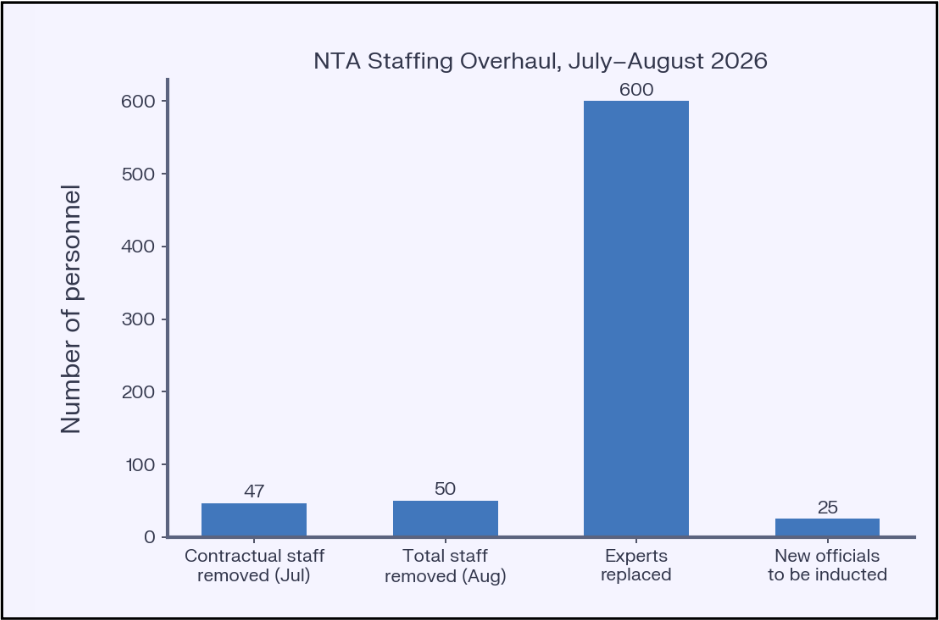
| Institutional overhaul | National Testing Agency | Around 600 experts replaced; four-tier paper checks; CISF security | Implementation underway |
Source: PRS Legislative Research; PIB; The Hindu; New Indian Express; Onmanorama; Kerala Kaumudi; India Today; Moneycontrol (July–August 2026 reporting)
Source: India Today, Moneycontrol, CNBC TV18, Deccan Herald (July–August 2026 reporting)
Deterrence Versus Prevention:
Towards a Genuine Roadmap for Competitive Exams in India
Let us give the Amendment Act its due before further critique proceeds. Fairness demands acknowledging real progress alongside real, persistent limitation. It substantially raises penalties for leaking papers or facilitating unfair means. It establishes Special Fast Track Courts and dedicated prosecutors for these cases. What once took years now compresses into a matter of months. These are not trivial achievements, and cynicism should not blind us here.
Yet, the Act’s silence on prevention remains its most conspicuous, glaring omission. Nowhere does it mandate vendor due diligence, the exact gap that TDPL exploited. Also, nowhere does it mandate independent evaluation audits, the vulnerability Keralam’s software revealed. Besides, nowhere does it establish enforceable transparency standards, forcing repeated litigation instead. That deficiency is precisely what Keralam’s Information Commission has had to fight.
A genuinely holistic roadmap must rest upon five interlocking pillars overall. First, secure logistics: tamper-evident custody chains from the printing press to the exam hall. Second, vendor governance: a public, cross-state blacklist stopping agencies like TDPL from resurfacing. Third, digital integrity: recurring, independent audits paired with immutable transaction logs throughout. Fourth, enforceable transparency: guaranteed script access and binding disclosure timelines for candidates. Fifth, protected whistleblowing: internal reporting channels shielded from institutional retaliation entirely.
Encouragingly, the National Testing Agency’s own overhaul suggests some institutions are internalising this logic. It replaced roughly six hundred examination-team experts and introduced four-tier paper checks. Whether Keralam PSC and Jharkhand’s recruitment bodies follow suit remains an open question. It is, at the time of writing this blog, a genuinely consequential and unresolved question for policymakers.
Consider briefly how the penalty regime itself has shifted under this legislative overhaul. Numbers often illuminate intent more precisely than rhetoric ever quite manages.
Source: PRS Legislative Research; PIB press releases; Livelaw analysis (2026)
The Human Ledger: What a Cancelled Exam Actually Costs
Statistical abstraction, however necessary for policy analysis, tends to anaesthetise real suffering. Consider that Jharkhand’s 2023 cycle drew over 500,000 applicants for just 583 posts. That ratio renders visible the sheer desperation animating this entire ecosystem. Behind such statistics lurk thousands of Meeras across the country today. Years surrendered to preparation, marriages postponed indefinitely, age-limit clocks ticking cruelly onward. Coaching-centre debts often outlive the very examinations they were meant to conquer. For a deeper exploration of the psychological toll this ecosystem exacts, our earlier piece on exam stress and mental health traces the quiet desperation behind the statistics.
Prime Minister Narendra Modi once counselled anxious students at Pariksha Pe Charcha directly. He urged them not to let “the pressure of studies and examinations overpower” their sense of self. Sound advice, undoubtedly, yet strangely inadequate for a different kind of pressure. That pressure originates not from a difficult syllabus but from an untrustworthy system.
Herein lies the deeper paradox this investigation must finally confront directly. Competitive exams in India were conceived as instruments of social mobility. They were meant to let merit triumph over privilege and inherited lineage. When these instruments malfunction, they risk becoming precisely the opposite instead. They become a lottery dressed in meritocracy’s borrowed, increasingly threadbare clothing. Examination integrity, viewed this way, is no mere administrative footnote anymore. It is a genuine question of social justice and generational equity.
A Reflective Analysis: Holistic Solutions and an Enduring Call to Action
What, then, might a mature democracy owe its most anxious young citizens? At minimum, it owes an examination system whose failures stay genuinely rare. It owes remedies that arrive swiftly, not years after the original harm. It owes institutions that treat transparency as obligation, not selective courtesy. State Public Service Commissions must adopt binding evaluation-audit standards immediately and consistently. They cannot merely promise internal inquiries after each fresh scandal erupts. Governments must establish automatic triggers for independent investigation past a severity threshold.
Courts and information commissions must keep pressing institutions like Keralam PSC toward disclosure. As Justice K.K. Mathew once observed, “accountable officials leave “but few secrets” worth hiding”. Parliament, having shown legislative agility with this Amendment Act, should now act again. It should summon comparable urgency for a genuine preventive-governance framework nationwide. A national vendor-blacklist registry, mandatory evaluation audits, and enforceable access rights would help. Together, these would constitute a formidable, credible second act for reform.
To the reader who has journeyed this far, here is a modest, earnest request. Interrogate your state PSC’s transparency record with the scepticism you’d apply to a bank statement. File that Right to Information request you keep quietly postponing out of habit. Share this analysis with someone still preparing anxiously for their next attempt. Trust, unlike a syllabus, cannot be crammed the night before results arrive. It must be earned deliberately and repeatedly, examination after examination, year after year.
Somewhere in Ranchi, as this blog gets published, an aspirant continues waiting patiently. Her exam no longer technically exists, yet her hope stubbornly persists regardless. Her demand is not complicated once stripped of its political theatre entirely. She simply wants her next attempt to mean something enduring and real. Stronger laws, however welcome, constitute only half of what India owes her. The remaining half is a system honest enough to finally deserve her trust.
We at ExpressIndia.info believe that a nation entrusting its brightest young minds to examinations owes them, in return, nothing less than unwavering institutional integrity. We assure our readers that we will keep following this story till it meets its intended conclusion. To our readers, we invite you to express your ideas, opinions, suggestions and experiences on this topic openly as comments.
Express India, Express 🗣️🎤📢
#CompetitiveExamsInIndia #ExamReformIndia #JharkhandProtest #KeralaPSC #ExamIntegrityIndia